


Next
What reMarkable can teach you about building a deep brand (that sells itself)
Brand Breakdown
How you can build a brand your dream clients market themselves toward.
Welcome to The Deep Clients. We break down the brands that grow by being impossible to ignore. We analyze the principles they use to resonate with Deep Clients—the people who don’t just buy from them, but invest in the brand and spread the word to like-minded people.
And you can build yours.
———
You’ve probably wondered why clients choose competitors over you—even when your offer has more features and a better price. It’s not because they have better branding. It’s because their clients recognized something: this is the only brand that truly understands me.
The brand that defines its person most clearly wins.
There’s a company that cracked something most people miss entirely—and today we’ll break down what they did to make you see your own situation differently.
Once you shift your lens, your actions will change, and so does your result.
The company is reMarkable. They make a tablet.
But what they actually sell is a transformation for a specific group of people that the iPad can’t do.

The story underneath the reMarkable tablet
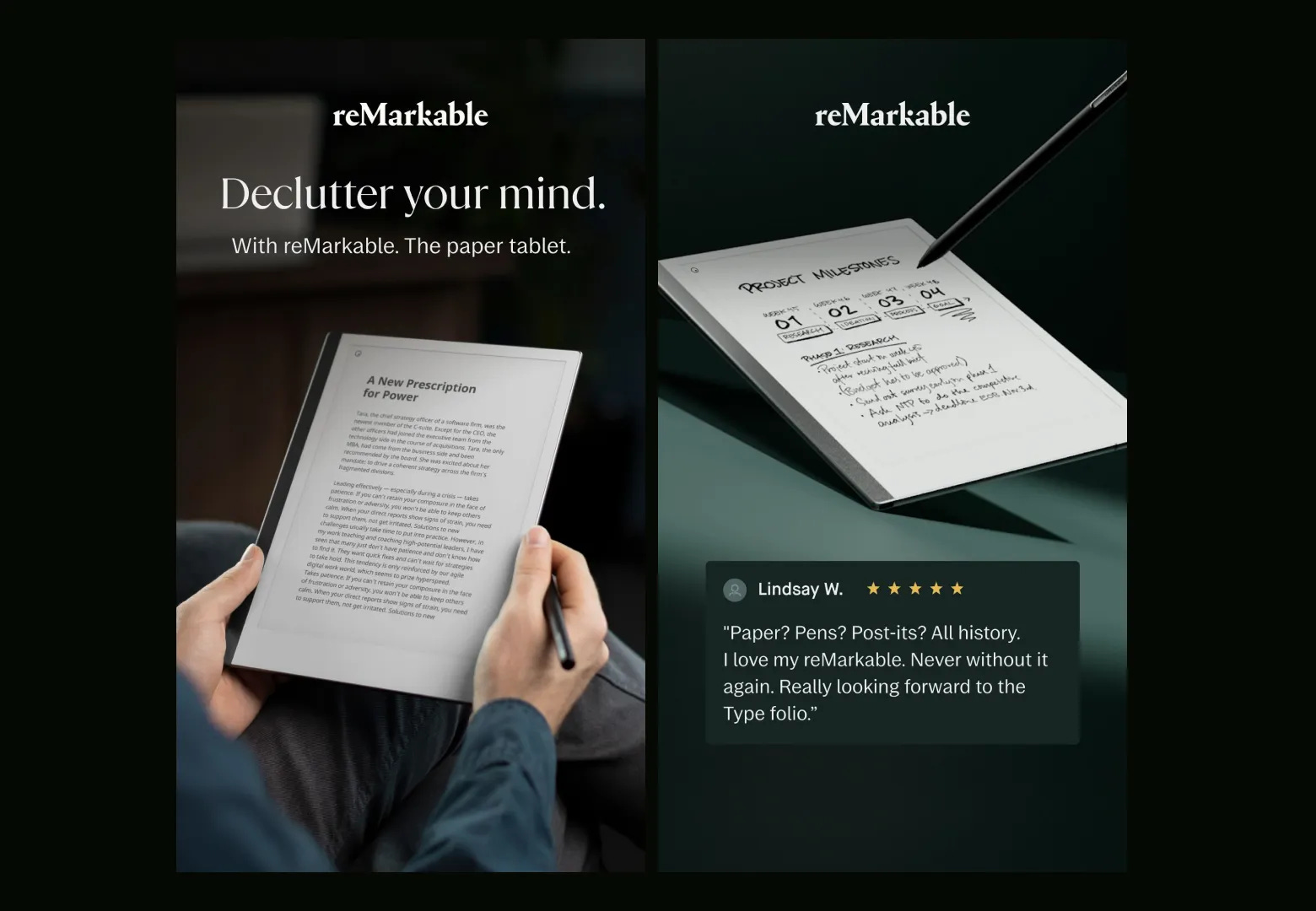
reMarkable’s tablet has no apps. No email. No browser. No color. Just writing.
It costs $400. The pen is another $50.
They’re competing against Apple and Amazon and every tablet that does a thousand things for half the price.
And yet they just reached USD 434.3 million in revenue for 2024, a 28% increase over the previous year. After crossing the one million devices sold mark in 2022, they sold 791,000 units in 2024 alone (reMarkable Invest Group, 2025). Ninety percent of their growth comes from word of mouth.
People telling other people about a device that does almost nothing. Why?
They solved the problem everyone else skipped, or too tiny to invest on
Here’s something else reMarkable understood that most of their competitors missed entirely.
The whole tablet industry believed more features meant more value meant more customers. Apple believed it. Samsung believed it. Everyone was racing to add more.
But reMarkable asked a different question: what if adding more is actually the problem?
Digital devices promised to help people think and create. Instead, they prevented thinking. Social media, notifications, Netflix, AI tools, and the flashy “Liquid Retina XDR” screen that glues your eyes to it, making you abandon your consciousness and your thinking.
reMarkable saw the people everyone else missed. Writers. Researchers. Executives. People who remember what deep work felt like. Who know something is broken but blame themselves instead of their tools.
They weren’t looking for a better tablet. They were looking for their minds back.
The few who bring the few
Here’s where it gets interesting for what you’re building.
reMarkable doesn’t need to reach everyone. They don’t even try.
They need writers and thinkers who will use it deeply. Those people experience real transformation. Their work improves. Others notice. They tell the story—because the story makes them look good. They attract similar people who want the same transformation.
Specs seekers, gamers, tech nerds will say “too expensive,” “it’s useless.” Good. The premium filter is working. “Too limited” means the focus positioning is working. “My iPad does more”—yes, exactly. Go buy your iPad.
The people who leave were supposed to leave.
reMarkable doesn’t want them. Not because they’re bad people. Because they’re not the right people for this story.
But the few who feel seen? They hear something different. Not a sales pitch. An invitation.
“We’re conscious thinkers who protect our focus. Are you one of us?”
The result,
Ninety percent of reMarkable’s growth from word of mouth. Not ads. Not campaigns. Customers who can’t stop talking about what it did for them.
$434.3 million a year from this loop.
Marketing can’t do this. Only belonging can.
This is what I want you to think about for your own brand.
You probably have some version of this already, even if you haven’t named it. Deep clients who did meaningful work with you. Who got real results. Who’ve sent you other people.
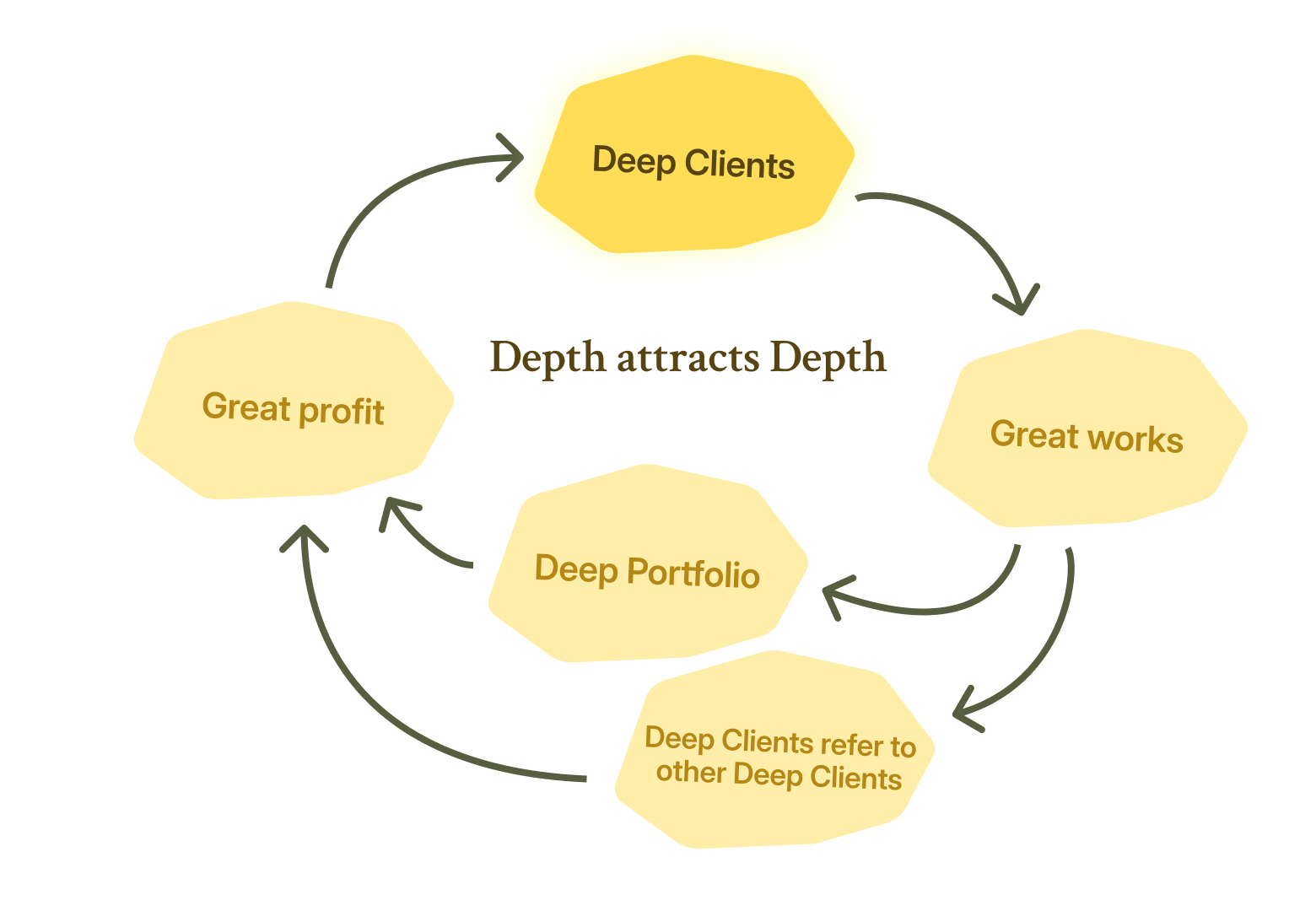
That’s the loop. Deep clients lead to deep projects. Deep projects increase your credibility. Credibility attracts referrals. And here’s the key—deep clients don’t refer randomly. They refer people like themselves. People in their world. People with similar standards.
One deep client becomes a credibility asset forever. Their transformation is your case study. Their network is your pipeline.
What if you only needed ten deep clients per year?
Ten clients at premium pricing with genuine transformation. Ten transformed clients referring similar people. Ten case studies compounding into reputation.
You’re not chasing volume. You’re cultivating depth.
Look at your best clients right now. Where did they come from? Who referred them?
What would change if you stopped trying to reach everyone and built your whole brand around serving the few who would bring you the few?
The story that sells itself.
People don’t buy products. They buy stories they want to tell about themselves.
When someone being marketed about reMarkable, the right people will see it touches, but might not have enough courage to decide yet. But overtime, their actual life, their daily usage with their iPad, raising distraction, will trigger them back the story they heard before.
reMarkable doesn’t market to them, they’re marketing themselves toward the product.
And soon after that, they’ll decide.
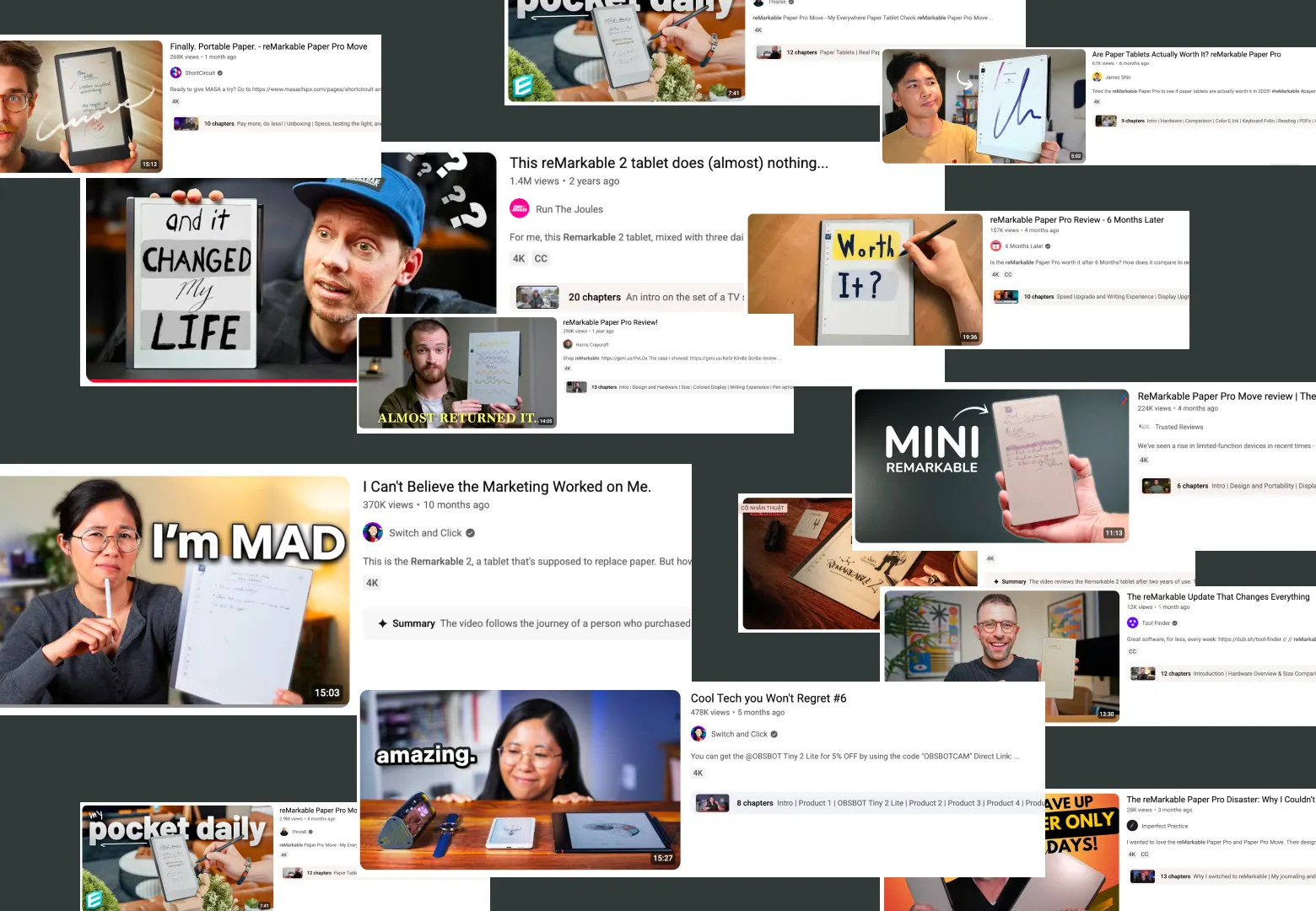
Here’s a review from a Youtuber that has been marketed
When someone buys a reMarkable, they’re not buying a tablet. They’re buying the right to say: “I’m the kind of person who thinks deeply. Who doesn’t need constant stimulation. Who values focus over features.”
That’s a story people want to believe about themselves. More importantly, it’s a story they want others to believe about them.
So when someone sees the reMarkable on your desk and asks about it, you get to say: “It’s this thing with no apps, no distractions, just writing. It completely changed how I think.”
That sounds like a product recommendation. But really it’s a status statement wrapped in helpfulness. You’re saying: my thoughts are worth protecting. My work is serious. I have the discipline to choose focus.
Nobody shares “I bought a competitively-priced tablet with adequate features.” But “I bought a $400 device that does almost nothing and it changed my life”? That’s a story.
Now think about what you’re building.
What story do people get to tell about themselves when they work with you?
“I hired a realtor” is one story. It’s fine. It’s forgettable.
“I’m working with this real estate agent—he’s an immigrant too, just had his first kid. He actually gets what it’s like to buy your first home in a new country. Not just the paperwork. The fear. The questions you’re embarrassed to ask.” is a completely different story. That one’s worth telling at dinner.
You’re probably thinking about your positioning. Your messaging. Your offer structure. Those matter. But underneath all of it is this question: what story are you giving people permission to tell about themselves?
If the story isn’t worth telling, the brand doesn’t spread. No matter how good your marketing is.
What’s the story your dream client wants to tell? About their standards, their growth, the level they’re operating at?
Does working with you give them that story?
What You’re Actually Selling
Let’s be honest about what reMarkable sells.
Not a tablet. Not even focus.
You can think again.
The restoration of something lost. The ability to be present with your own mind. To remember what deep work felt like.
Worth $400 to someone who feels the loss. Worth nothing to someone who doesn’t.
People don’t evangelize products. They evangelize transformations.
“This tablet has good specs” makes no one care.
But “This gave me back my ability to focus” makes everyone lean in.
You’re probably describing your work in terms of deliverables right now. Sessions. Frameworks. Modules. Hours.
But what do your clients actually get? What’s different about their life after working with you?
Shallow clients want services. Deep clients want transformation.
That’s what you’re selling. That’s what justifies premium pricing. That’s what creates clients who can’t stop talking about you.
Here’s a test. If your past client was at a dinner party and someone asked what they got from working with you, what would they say?
“Coaching sessions” means you haven’t given them a story worth telling.
“She completely changed how I see my business” means you have an evangelist.
People can’t unsee what they have seen.
So, what transformation do you create?
If you named it clearly, how would it change what you charge? How you describe your work? Who you try to reach?
The Choice That Makes Everything Else Possible
reMarkable’s real innovation wasn’t the technology.
It was choosing their person first.
Not “who can we sell to?” but “who would we build something irreplaceable for?”
Once they made that choice, everything else became obvious. What to remove. What to charge. What criticism to ignore. What story to enable.
Most brands ask: how do we reach more people? The deep brands ask: how do we become irreplaceable to specific people?
You’re building your brand right now. Making choices about positioning, about offers, about who you’re trying to reach.
You can keep optimizing for reach. More content. More visibility. More people in the funnel.
More exhaustion.
Or you can choose your person and build everything for them.
The few who become deep clients. Who do meaningful work with you. Who tell your story to the few more who become the next deep clients.
The loop that compounds instead of the funnel that leaks.
It means turning away money sometimes. Watching potential clients go elsewhere. Trusting that the few are enough.
It means believing that one transformed client is worth more than ten satisfied customers. That the story they tell will bring you the next one.
Where this leaves you
You don’t need to reach everyone.
You need the few who want the story you’re offering. Who need the transformation you provide. Who will become proof and bring you more people like them.
reMarkable built $434.3 million a year with two products that do almost nothing. Ninety percent word of mouth. Because they gave specific people a story worth telling about themselves.
What’s the story your dream client wants to tell?
What would you build—offer, price, say, refuse—to give them that story so completely they can’t help but share it?
The few will find you. And they’ll bring the few who will find you.
That’s how depth spreads.
You just have to trust that the few are enough.
Because,
Depth doesn’t scale. It compounds.
—Hieu Vu

How Fujifilm built a brand that markets itself through believers.
The clients who become evangelists aren't the ones who agree with the consensus. They're the ones who've been waiting for someone to validate their different way of seeing.


Aesop: The brand that refuses to convince you
When a brand stops trying to convince people and starts trusting them to recognize what they're experience

Why the best clients never need convincing
Convincing creates shallow clients. Not because they’re bad people. Because the relationship was built on push-pull and persuasion, not resonance.

Why Your Toronto Salon is Stuck in the Shallow Client Trap (And How to Break Free)
You're busy. Your calendar is full. Your phone is ringing. Walk-ins are constant. So why does it feel like you're running a treadmill—working harder every month but never actually getting ahead?